Podcast Merch: Mic Checks, Episodes, and the "We'll Fix It in Post" Vibe
By the PixelPunch team · September 3, 2026
There is a specific kind of tired that comes from editing your own voice for two hours. It is not the same tired you get from filming. Filming is energy. Editing a podcast is a strange, quiet endurance — listening to the same sentence thirty times, deciding whether the "umm" on take four really is better than the "uhh" on take seven, and slowly realizing you have become the world's leading expert on the sound of your own mouth.
I have been there. I have spent a Sunday afternoon with a waveform on screen, a cup of coffee gone cold beside me, and the stubborn belief that this episode is one more clip away from being great. And somewhere in that haze, I started noticing something about the merch that podcasters actually wear, what it means, and why "we'll fix it in post" is the truest motto the creator world has ever invented.
This article is a love letter to the podcast grind — the pre-show nerves, the editing marathons, the guests whose audio you had to rescue, and the honest truth that most of what makes a show good happens after the record button stops blinking. If that sounds like you, this one is going to hit close to home. And yes, there is merch for people like us.
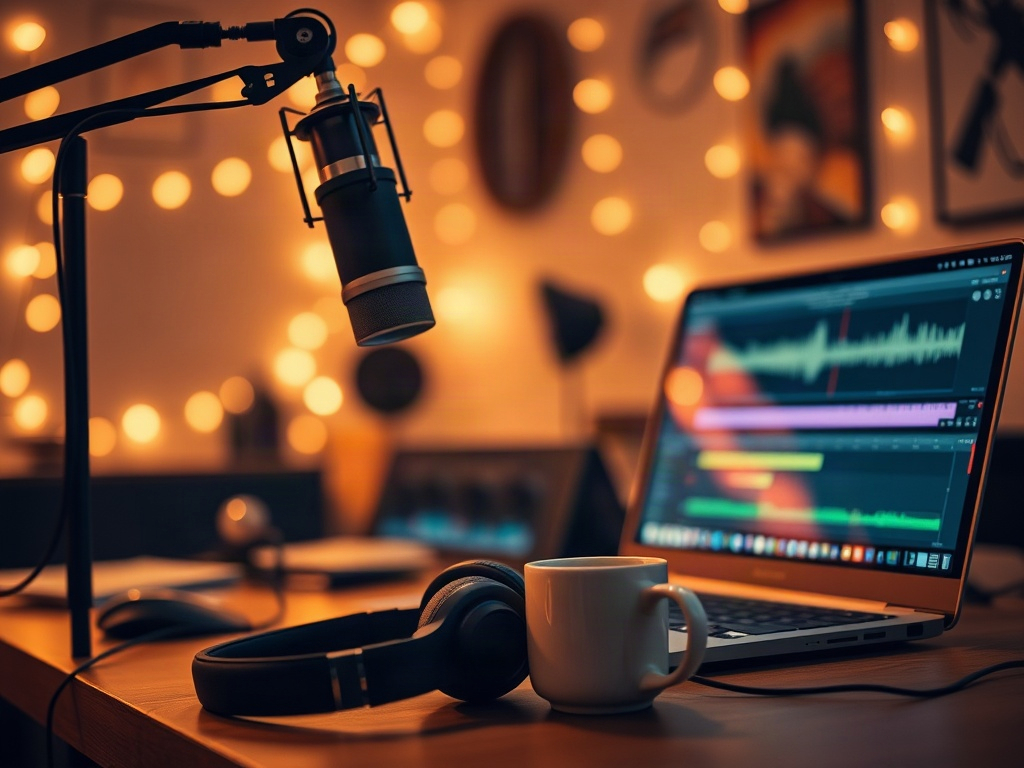
The Mic Check Is the Whole Personality
Here is the thing nobody tells you about podcasting. The most anxiety-inducing thirty seconds of your week are the ones right before you hit record, when you lean in and ask the question that every host has asked a thousand times: "Can you hear me okay?"
There is no honest answer to this question. No one has ever said "no, actually, I can't hear you at all, do something about it." The guest always says "yeah sounds good," and then you spend the first ten minutes convinced that your voice is too quiet, the room has a weird echo, and the neighbors' dog is going to bark at the exact wrong moment.
That anxiety is not a bug. It is the job. Every creator I have ever met has a pre-show ritual, and most of them are quietly absurd. I have a friend who will not start recording until he has repositioned his microphone three times, moved his headphones from one ear to the other, and cleared his throat with the specific cadence of someone pretending to be confident. Another friend refuses to record before making tea in the same mug he has used for every episode for three years. It is not about the mug. It is about convincing the part of your brain that is nervous that today is a normal day.
And that is the seed of the whole creator-merch thing. The merch is never really about the microphone. It is about naming the weird, specific, human ritual that everyone in the audience secretly recognizes.
Editing Is Where the Show Is Made
Here is the part that surprised me the most when I started making audio content. The recording is maybe forty percent of the episode. The editing is everything else.
You sit down with three hours of conversation and turn it into forty minutes that does not sound like you chopped it up. You are not just cutting dead air. You are listening for the moments — the good laugh, the unexpected insight, the story the guest almost told and then stopped. And you are protecting those moments from the parts of the conversation that would bury them.
This is where "we'll fix it in post" becomes a way of life rather than a joke. It is the phrase you say during a recording when the audio glitches, or someone talks over someone else, or the neighbor mows their lawn directly into your guest's microphone. On the outside, "we'll fix it in post" sounds like a shrug. On the inside, it is a quiet promise to yourself that you will spend two hours in a dark room with a waveform to make it right.
I have rescued audio I had no business rescuing. I have EQ'd out a lawnmower. I have clipped out a 40-second tangent that derailed a whole segment. I have normalized the levels of a guest who recorded from a literal closet because it was the only quiet room in their house. The tools have changed — there is genuinely good AI-assisted cleanup now that pulls most of the hiss out automatically — but the job is the same. You are the person who hears the real episode underneath the raw recording, and you are the person who gets it out.
The Audience Hears Only What You Protect
Here is the thing that keeps me going through the fourth listen of the same sentence. The audience will never know any of this happened.
They will not know that the guest's internet dropped for six minutes. They will not know that you had to punch in a re-take that you stitched together so carefully you forgot where the seam is. They will not know that the episode that sounds so effortless almost did not happen, because you very nearly talked yourself out of recording at all.
All they hear is the forty minutes. And in that forty minutes, all the anxiety, all the editing, all the rescues, all the late nights with a cold coffee — it all disappears into something that sounds like a conversation between two people who enjoy each other's company. That is the invisible miracle of the craft. The best compliment you can get as an editor is not "great editing." It is nothing. It is silence, because the listener never noticed there was anything to fix. The work that is done well is the work nobody sees.
I think about that a lot, the gap between the chaos of making a show and the finish of the thing that goes out. It is the same gap that every creator lives inside — the way the finished video, the polished episode, the well-lit thumbnail never quite shows the mess that produced it. The audience gets the ninety-nine percent of the process that looks put-together. The creator carries the other one percent, the quiet panic that it could all fall apart, the fear that this time the fixes will not be enough. (And when I say ninety-nine percent, I mean the system — the tools, the editing, the habits, some of it genuinely AI-assisted now — not that a machine makes your show for you. The craft is still yours.)
The Merch That Names the Feeling
So here is where I get to the part I actually love, because it is the part that connects all of this to something you can hold in your hand.
Podcast merch has a bad reputation, and most of it is deserved. A lot of shows treat merch like a logo they want to sell you, a sticker of the show name that only means something if you already know the show. That is not what I mean by merch. The merch that actually works — the kind creators actually wear, the kind that sells — is the merch that names a feeling the audience already has.
The "we'll fix it in post" mentality, the pre-record nerves, the invisible labor of making something sound effortless — that is a whole community's inside joke. And the best creator merch puts that joke on a shirt so the whole world can see you are in on it.
That is exactly what the 99% AI, 1% PANIC mug in the PixelPunch collection does. The "99%" is the whole system — the recording, the editing, the rescue work, the tools that help (some of them genuinely AI-assisted now), the showing up week after week. One percent is the panic. The mug names the ratio that every podcaster, editor, and content creator lives with, and it does it in a way that makes the whole thing feel lighter. You cannot fix the panic. But you can stop feeling alone in it.
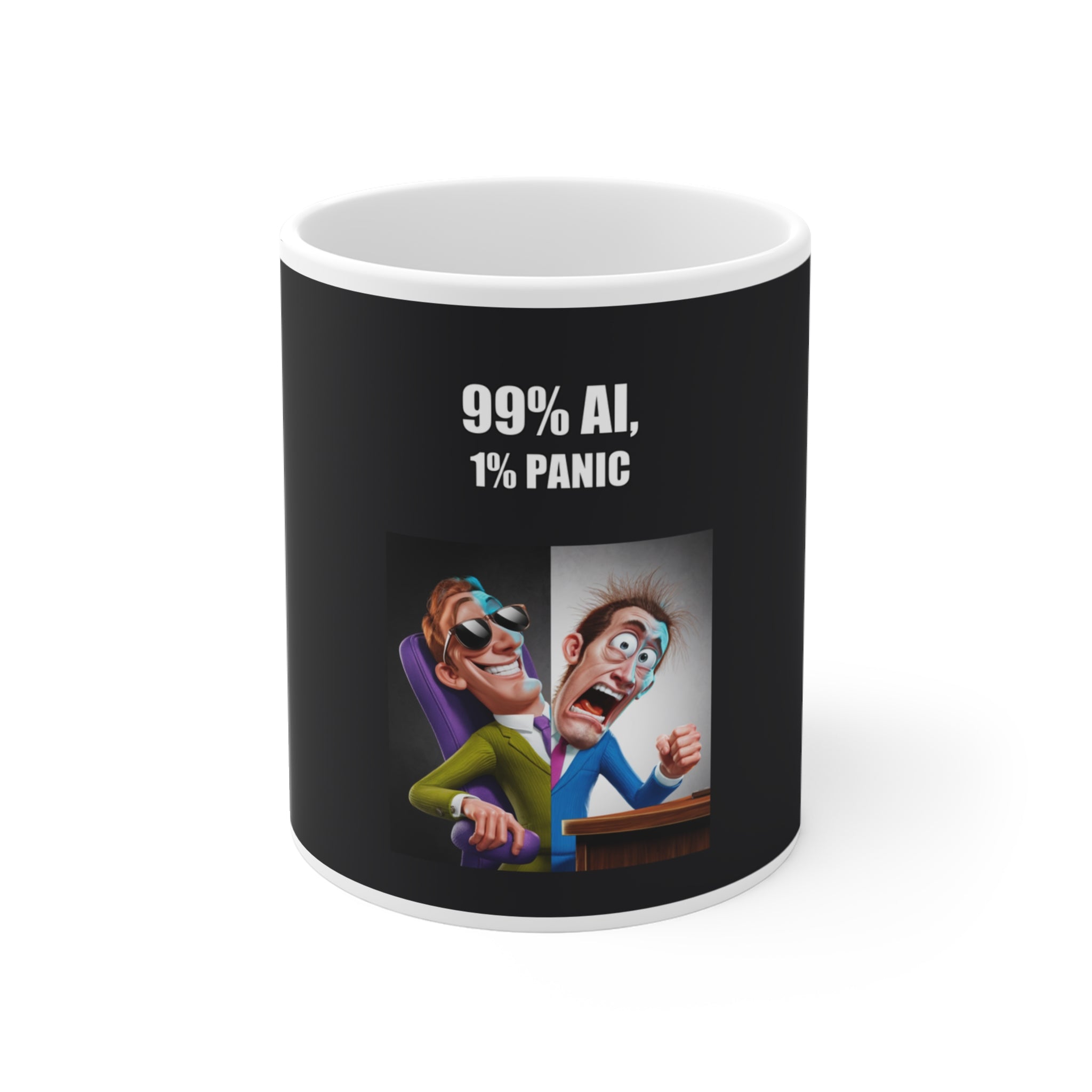
There is also a version of the joke for the rest of the creator pipeline. If the mug is for the person at the editing desk, the 99% AI, 1% PANIC shirt is for the one who shows up to the studio, mic anxiety and all, and somehow makes it sound easy.
Good creator merch does not sell you a show you have never heard of. It sells you recognition. It says "I know exactly what that week was like, and I am going to put it on your chest so the whole internet can see that you get it." That is not a logo. That is community.
The Real Ratio of the Job
Let me land this with the thing I have been circling the whole time. Every creator's life is a ratio, and the ratio is not what you would guess from the outside.
Ninety-nine percent of the job is invisible and unglamorous. It is the mic check. The setup. The retake because the dog barked. The two hours of editing that makes it sound like there was never a problem. The quiet, tedious, glorious work nobody sees and everybody benefits from. And the one percent is the panic — the pre-record nerves, the moment right before publish where you wonder if this is the one that finally does not land.
The trick is not to eliminate the panic. You cannot. The trick is to let the ninety-nine percent hold it — to let the system, the habit, the routine be strong enough that the one percent does not get a vote. You record because it is Tuesday and that is what you do on Tuesdays, not because you feel ready. That is the whole game, and it is why the creator's one-percent-panic joke resonates the way it does. It is not mocking the fear. It is naming it, which is the first step to not letting it run the show.
Keep Making the Show
Here is my honest advice, from one creator to another. Do not romanticize the grind. It is a grind, and pretending otherwise is how you burn out. But do not despise it either, because the grind is where the craft lives. Every fix in post, every extra take, every rescued guest interview is you getting better at the thing you do, and the improvement is compounding even when it does not feel like it.
Set up your space so the mic check is easy. Keep the ritual that calms you, whatever it is — the mug, the tea, the three microphone repositionings. Make your edit sessions finite, because a waveform can eat your whole afternoon if you let it. And when the panic shows up, as it always does right before publish, remember that it is one percent, and the ninety-nine percent has got you.
The audience will not know what you did to make it sound effortless. That is the point. But you will know. And so will every other creator who has ever sat alone in a room with a waveform, listening to their own voice for the hundredth time, convinced it is almost there.
The show is worth it. The invisible work is worth it. And the one percent panic — the thing that makes you care enough to keep fixing it in post — is, in its own strange way, the whole reason any of it gets made.
If you are looking for podcast merch that does not feel like you are wearing a billboard, the PixelPunch collection over at Hoojump is built for creators like us. The system is 99% of the work. The panic is 1%. The creator is all of it.